
Artist Insights: Accretion with Andrea Carracedo
Our Artist Insights series is aimed at sharing tips, advice, techniques, and practical information from seasoned professionals who work with our paint lines. These columns read like the sort of helpful guidance you’d get from a workshop or class without having to leave the comfort of your home.
In this post, R&F Core Artist Instructor Andrea Carracedo demonstrates how to achieve interesting textures using encaustic paint, R&F hake brushes, and stencils. She discusses the difference between accidental and intentional accretion, focusing on letting go of perfectionism and reveling in the richly rewarding act of discovery.
You can find additional resources for working with our paints, including demo videos and tutorials on our YouTube Channel. While you’re there, be sure to like and subscribe. Leave us a comment so we know what types of content you’d like to see.
Enjoy. Keep painting.
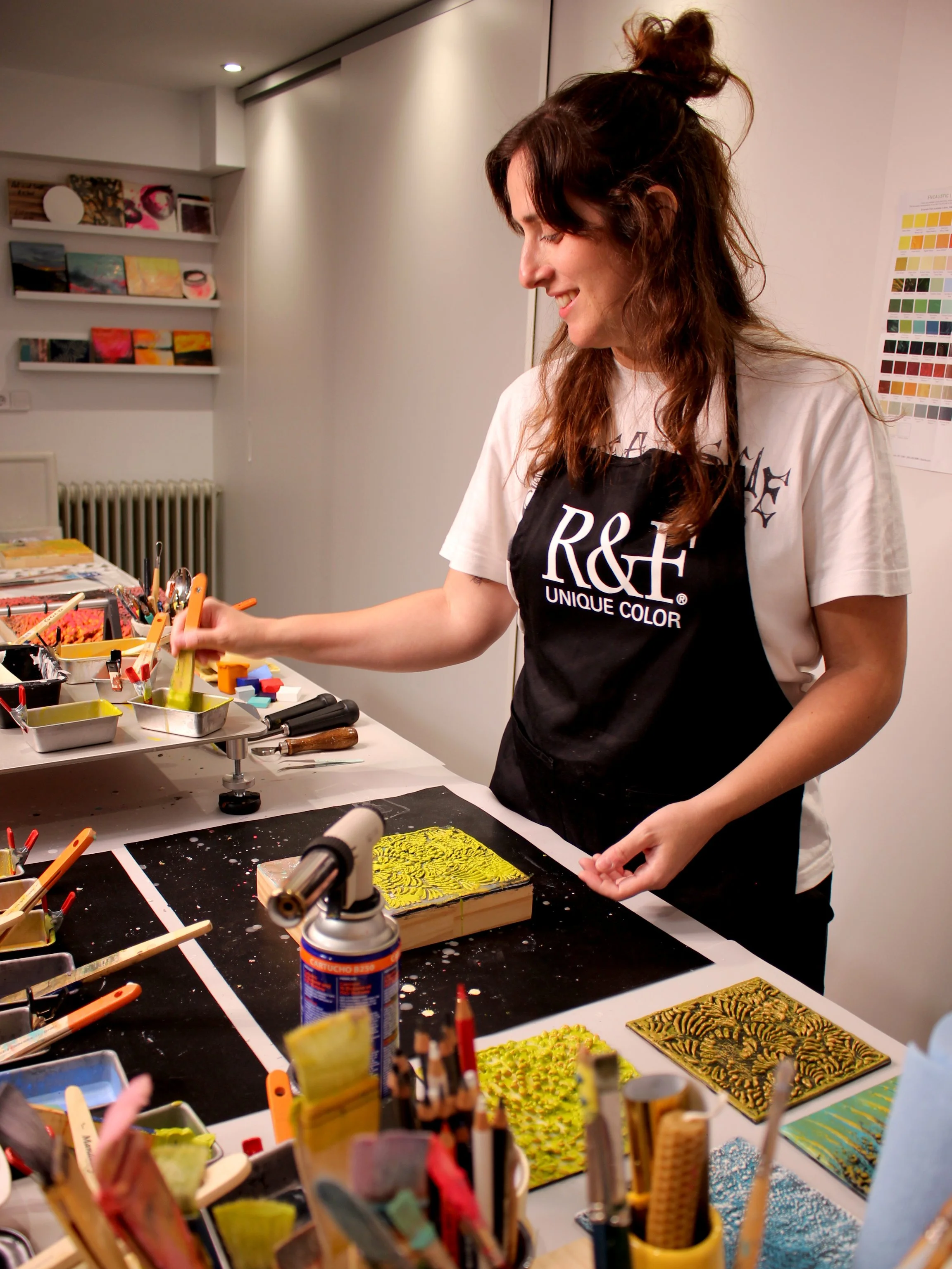
R&F Core Artist Instructor Andrea Carracedo in her studio in Banyoles, Catalonia.
I’m in love with texture, and with accretion in particular, because it allows me to explore the layering of materials, the depth, and the tactile possibilities that emerge from building something gradually. My background in acrylics and working with texture pastes laid the foundation for this fascination, informing how materials can interact and respond to different techniques.
I also work as an IT professional and, in a way, accretion mirrors my technical side: at first, it can be very precise and methodical, following one correct path to achieve a specific effect. But once that initial structure is in place, the process opens up. From there, I can explore countless directions and experiment freely; like a pop-up book, the painting unfolds beyond the initial framework.
Encaustic painting is a beautifully unpredictable medium —one that invites both control and spontaneity. As you deepen your practice, understanding how to balance accidental and intentional approaches can open up entirely new creative possibilities. In this post, we’ll explore two contrasting techniques to create accretion with wax.
The Cold Brush Technique and Accidental Accretion
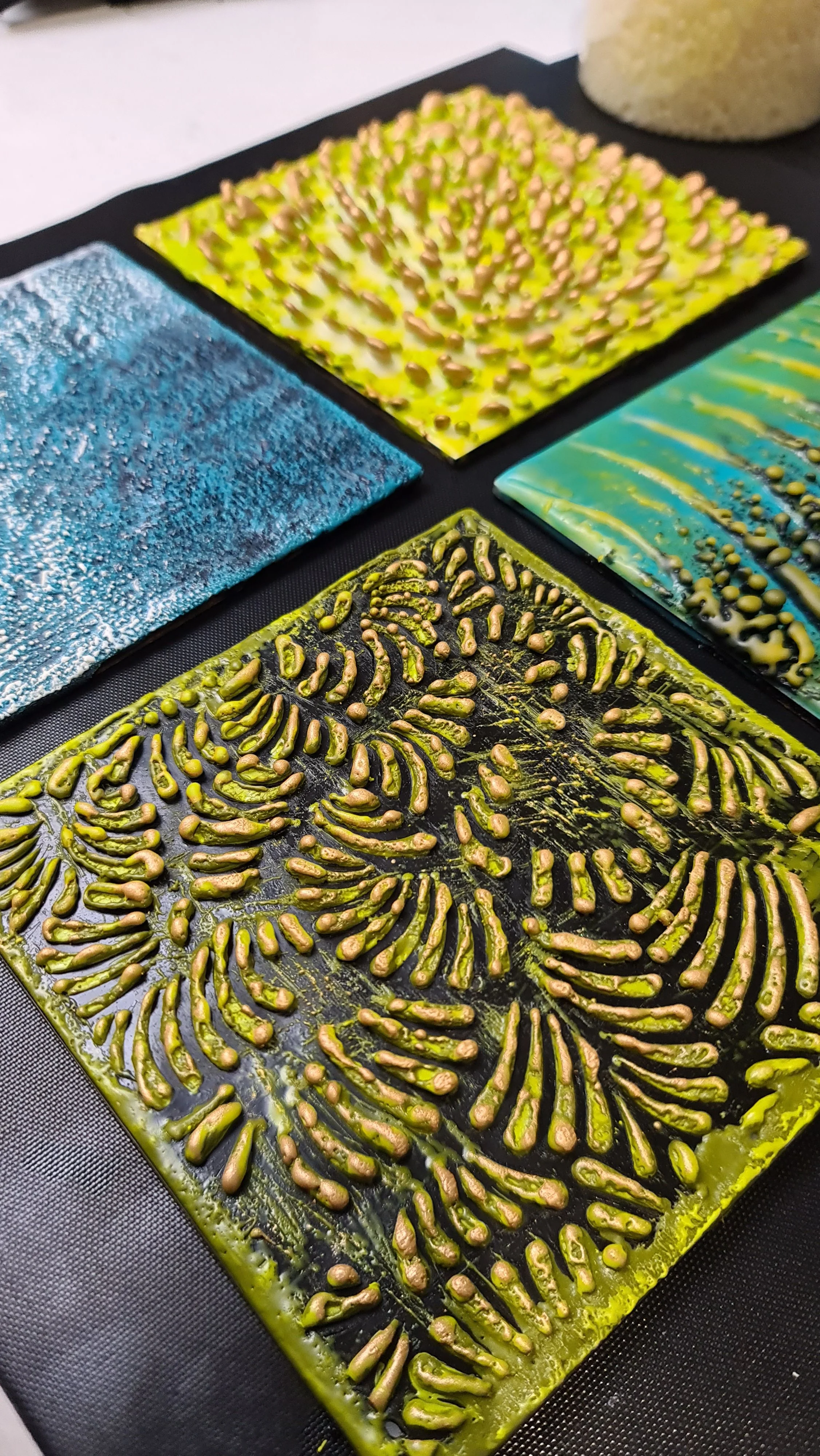
One of the most exciting aspects of encaustic is how it can surprise you. The cold brush technique is a great example of this. Working directly on a panel with an almost cold brush allows the wax to behave in unexpected ways. Instead of smooth, fluid strokes, you’ll get broken lines, dry textures, and a sense of resistance between brush and surface. The result? Marks and clusters that feel raw, organic, and often impossible to replicate intentionally.
This approach encourages you to let go of the impulse towards perfectionism. Rather than trying to control every outcome, you become an observer —responding to what appears on the surface. It’s a powerful way to loosen up, especially if you’re used to more controlled painting methods.
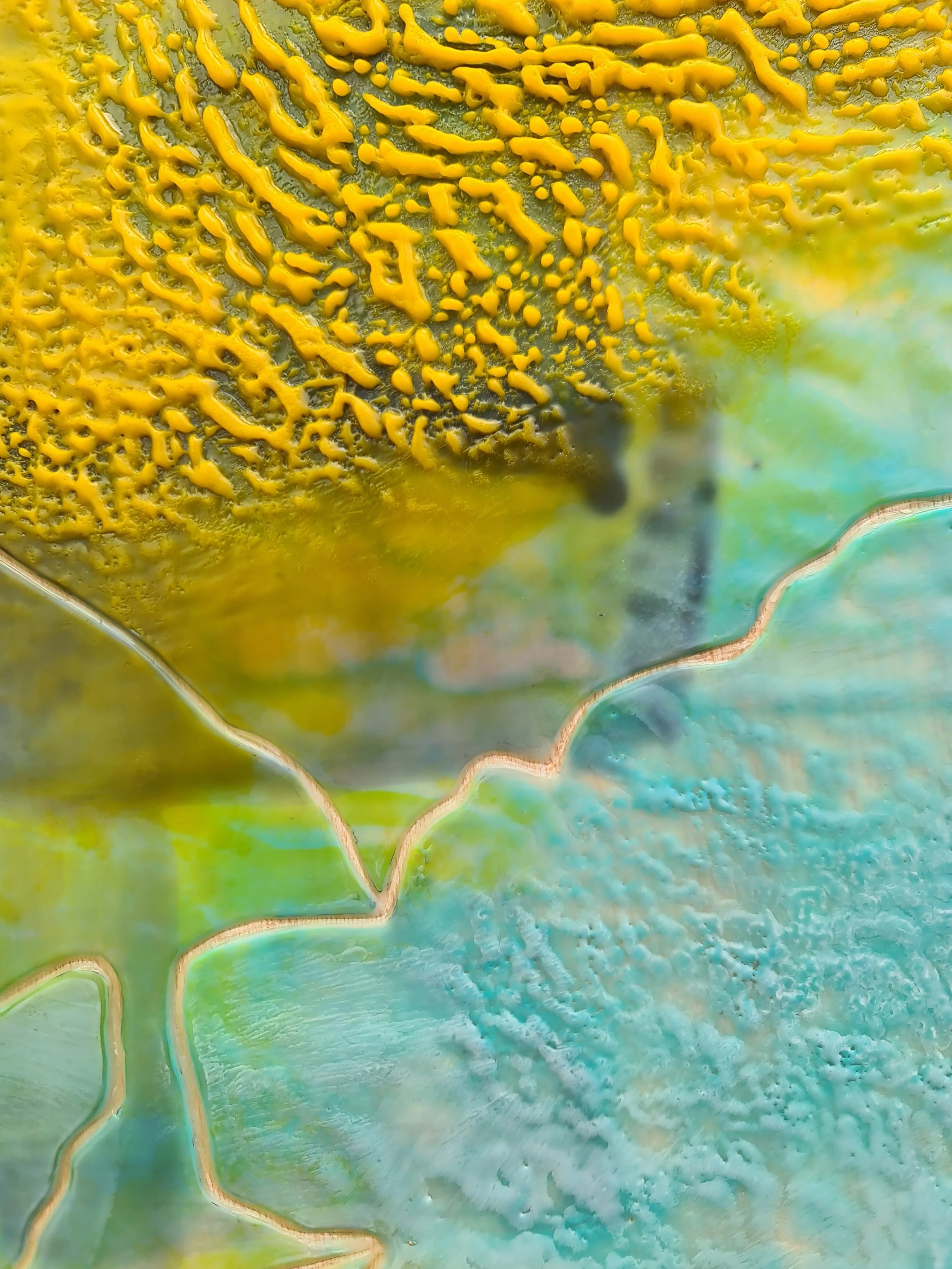
I highly recommend hake brushes by R&F, they hold a large amount of paint, making them ideal for quickly building accretion with the cold brush technique. They’re excellent for laying down smooth, even layers, but can also create beautiful textures depending on how you hold and move the brush.
Try this to create your accidental accretion:
Build up 4-5 smooth base layers.
Load your brush with encaustic medium or paint, then wipe it along the edge of your palette cup to remove excess wax. Give it some gentle shakes to cool it slightly —you’ll notice the wax loses its shine as it cools.
For the first layers, hold the brush vertically (that’s the trick!) at a 90º angle perpendicular to the panel, dragging in different directions until the brush no longer deposits wax. You’ll start to see the brushstrokes emerge, and with each layer, how the textures evolve.
Continue building layers in varied directions, occasionally fusing lightly to soften and unify the textures for a more rounded, finished look. Fuse using a small flame, where you can barely hear the hiss of the gas. Some encaustic artists don’t fuse at all when creating accretion, but fusing regularly will help stabilize both the textural elements and the overall piece.
Tip: As you keep building up layers, experiment with the pressure and the angle of your brushstrokes. Also try adding a layer of wax at a slightly higher temperature, or simplify your approach by working with just two contrasting brushstroke directions instead of many. Observe what happens, react, experiment.
The Power of Intention: Mark-Making and Stencils
On the other end of the spectrum lies a more deliberate approach. Starting with intentional mark-making allows you to build a composition with purpose from the very beginning. These two exercises have helped my students understand how accretion works. You might begin with two 6x6” or 8x8” panels prepared with 4-5 layers of encaustic medium.
Exercise on Panel 1: Draw lines or shapes into the wax with a needle tool. When you begin cold brushing perpendicularly to these marks, the wax will catch on the ridges, allowing you to gradually build up texture and dimension. Combine at least two different colors as on panel 2 as well.
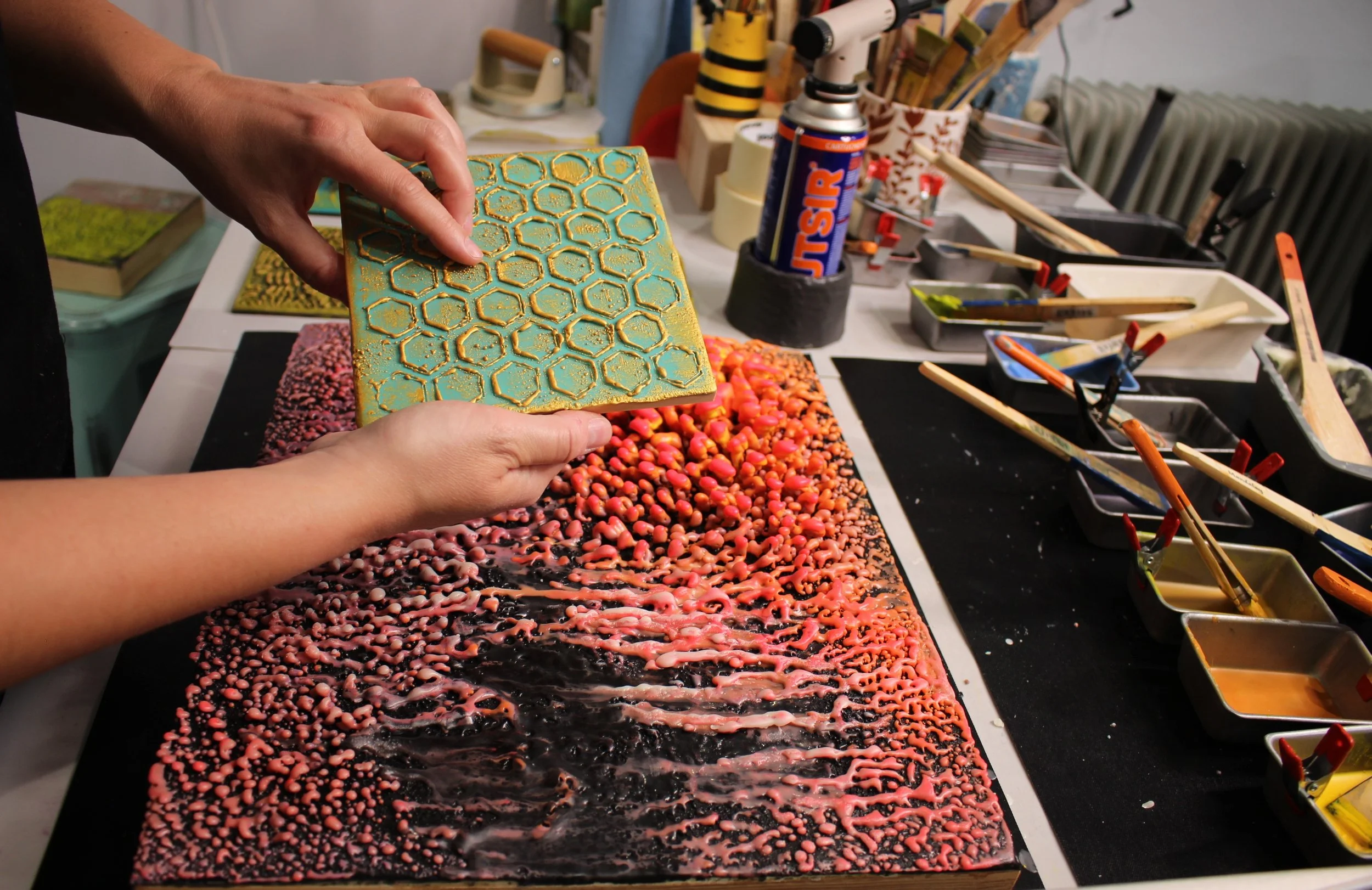
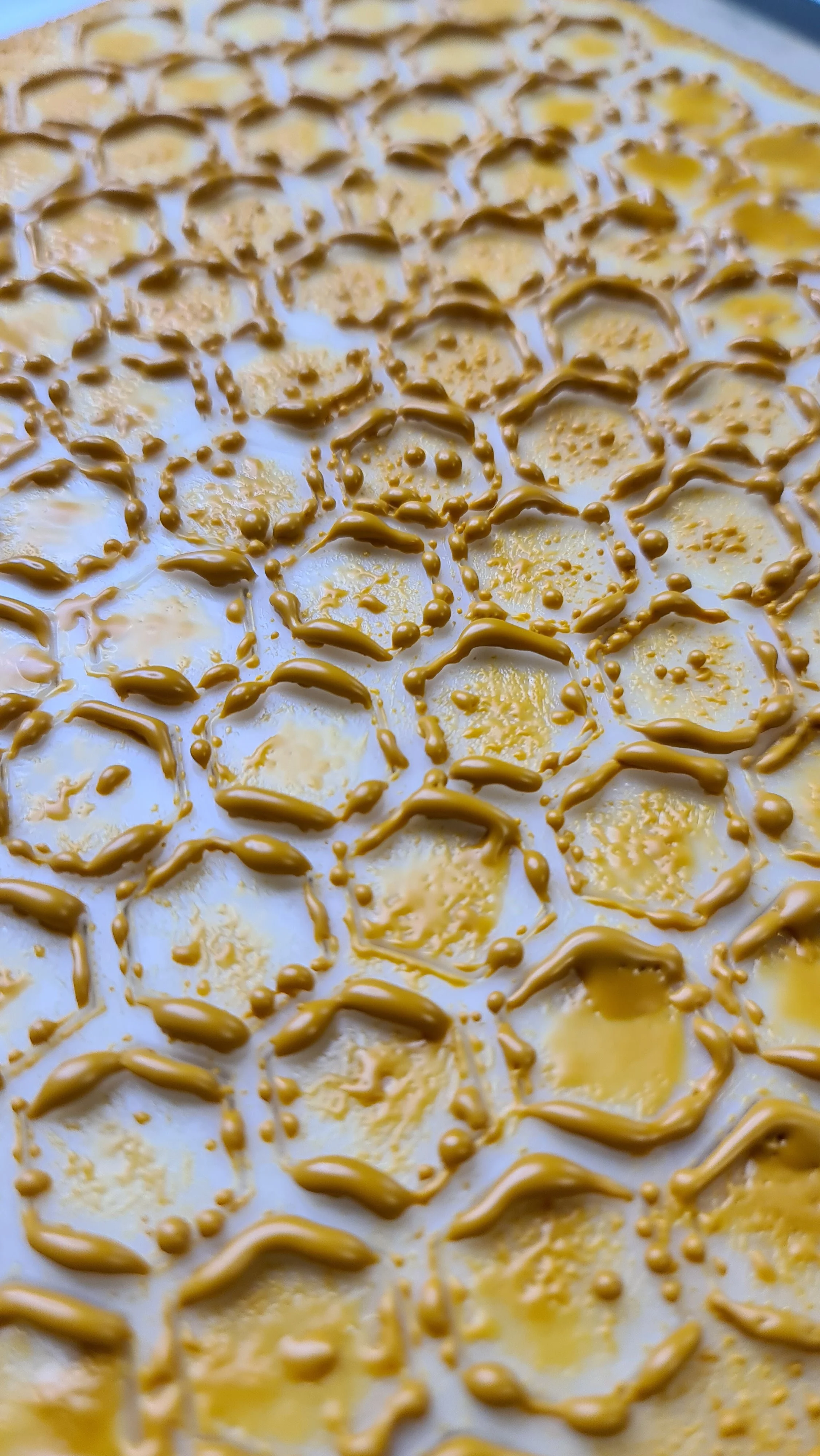
Exercise on Panel 2: Use stencils to introduce structure and repetition. Place your stencil onto a warm, medium-prepared panel, then brush 4 layers of color (or just medium). Gently peel off the stencil while the wax is still a bit warm. Now build up the accretion: vary the direction of your brushstrokes to help the shapes emerge. Hexagon pattern stencil work beautifully for this kind of exploration —the honeycomb shape is quite appropriate for encaustic.
These techniques give you a framework, something to respond to as you continue layering. They can also help when you feel stuck, offering a clear entry point into the piece. I describe this to students as the “accretion trance process”. What’s interesting is how these intentional marks often evolve. Once layered, they may partially disappear, blur, or interact with new elements in unexpected ways —bringing a subtle dialogue between control and chance.
Bringing It All Together
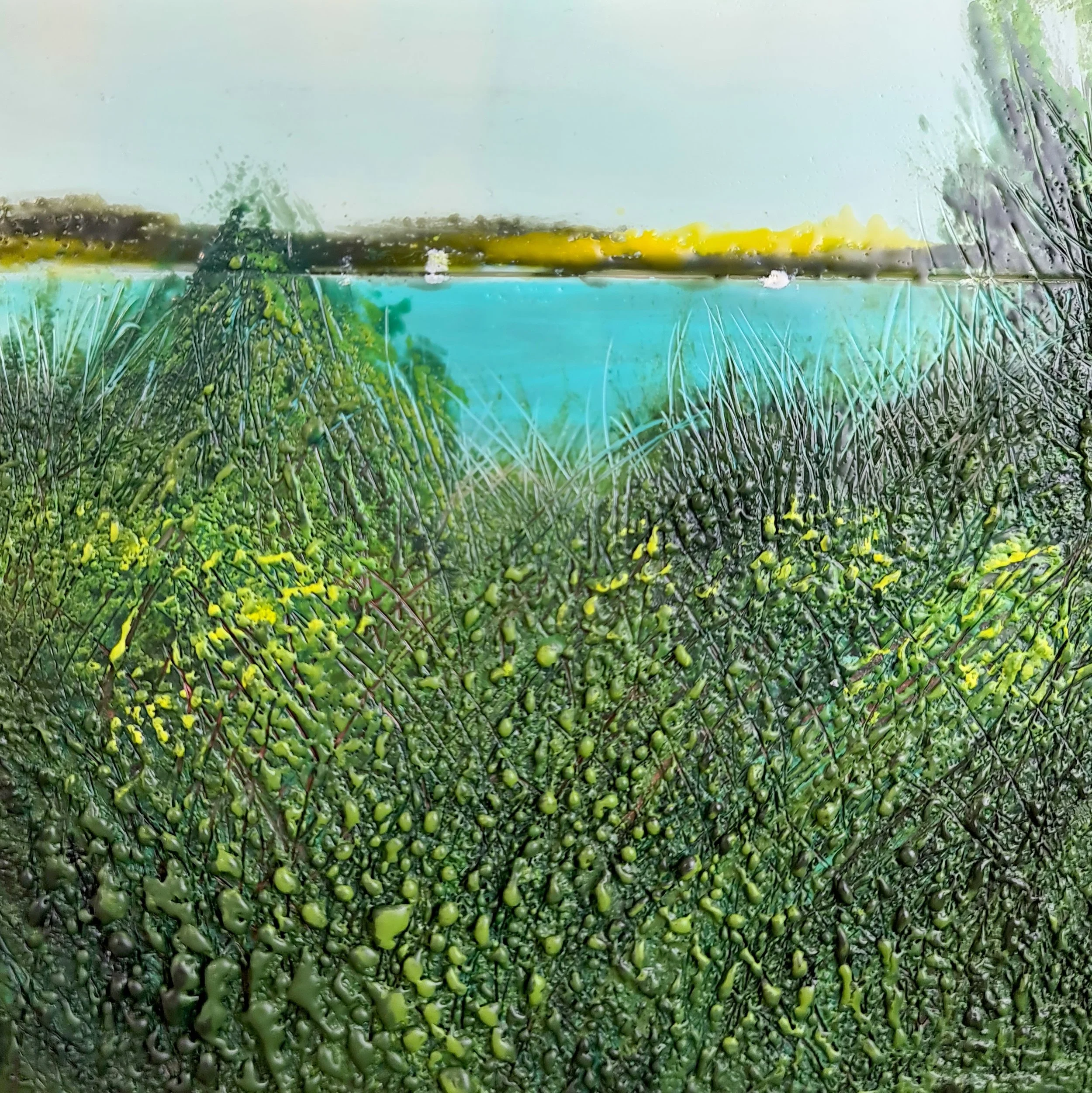
The magic of accretion often happens in the interplay between accidental and intentional techniques. A cold brush mark might inspire your next gesture. A carefully placed stencil might later transform into something unexpected.
Rather than choosing one approach over the other, try weaving them together, for instance: start with intentional marks to build a foundation and then introduce accidental techniques to disrupt and energize the surface. This balance keeps your work dynamic, layered, and alive.
Encaustic painting is as much about discovery as it is about skill. By embracing both control and unpredictability you allow your work to evolve in richer, more expressive ways. Stay curious, experiment often, and don’t be afraid of what you can’t fully control. That’s where the good surprises appear.