
Artist Spotlight: Color Mixing with Julie Snidle
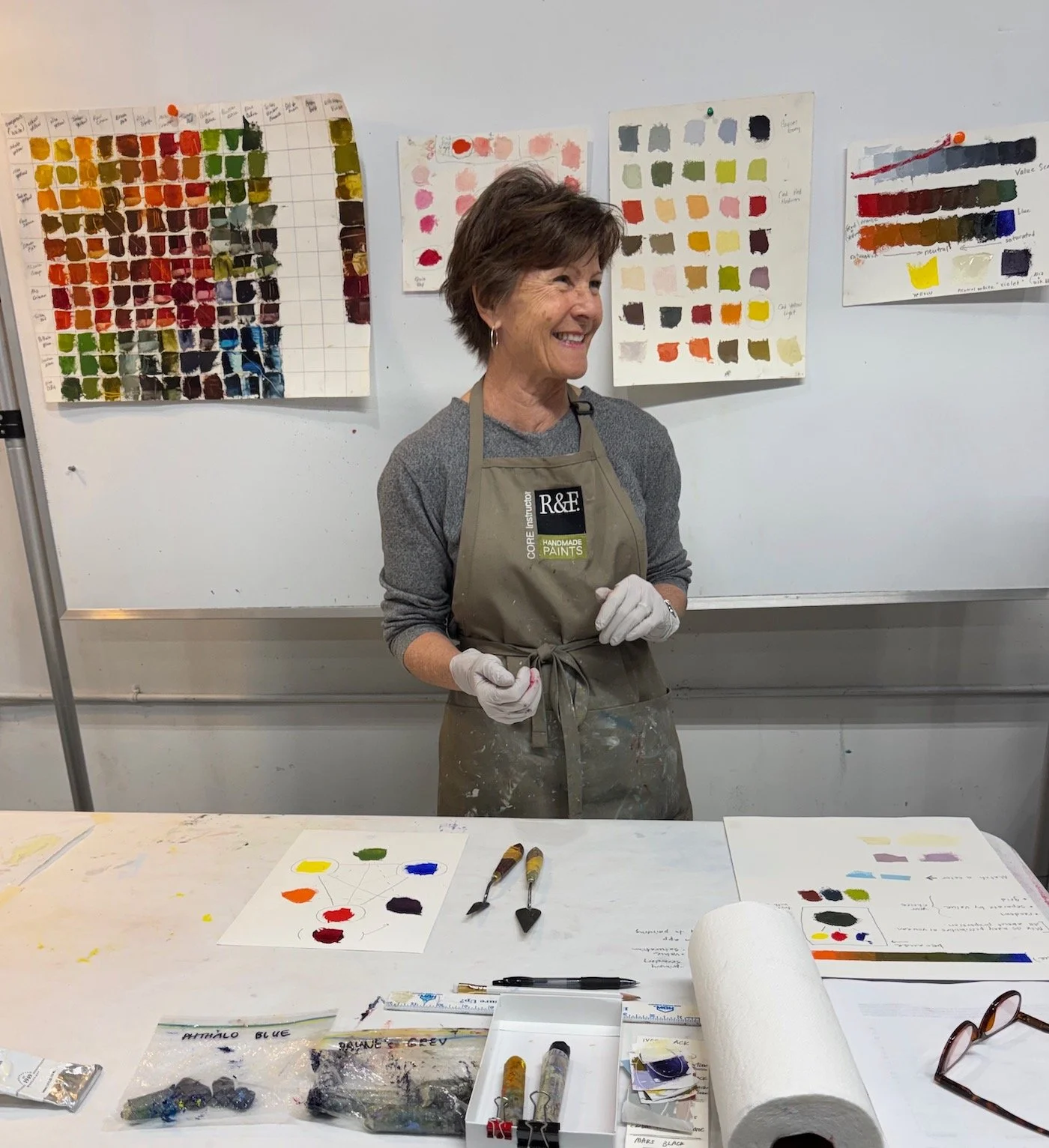
Core Artist Instructor Julie Snidle.
Our Artist Spotlight series shares tips, advice, techniques, and practical information from seasoned professionals who work with our paint lines. These columns read like the sort of helpful guidance you’d get from a workshop or class without having to leave the comfort of your home.
In this post, R&F Core Artist Instructor Julie Snidle demonstrates how to begin exploring color using R&F Pigment Sticks®. She discusses opacity and transparency, and shares three different exercise to strengthen your color mixing skills.
You can find additional resources for working with our paints, including demo videos and tutorials on our YouTube Channel. While you’re there, be sure to like and subscribe. Leave us a comment so we know what types of content you’d like to see.
Enjoy. Keep painting.
Whether I’m teaching with encaustic, oil, watercolor, or acrylic, there are always students who wish they knew more about color. They may have learned that red and blue make violet and that red and yellow make orange, but they may not understand that the red that makes a true violet is not the same red that makes a true orange.
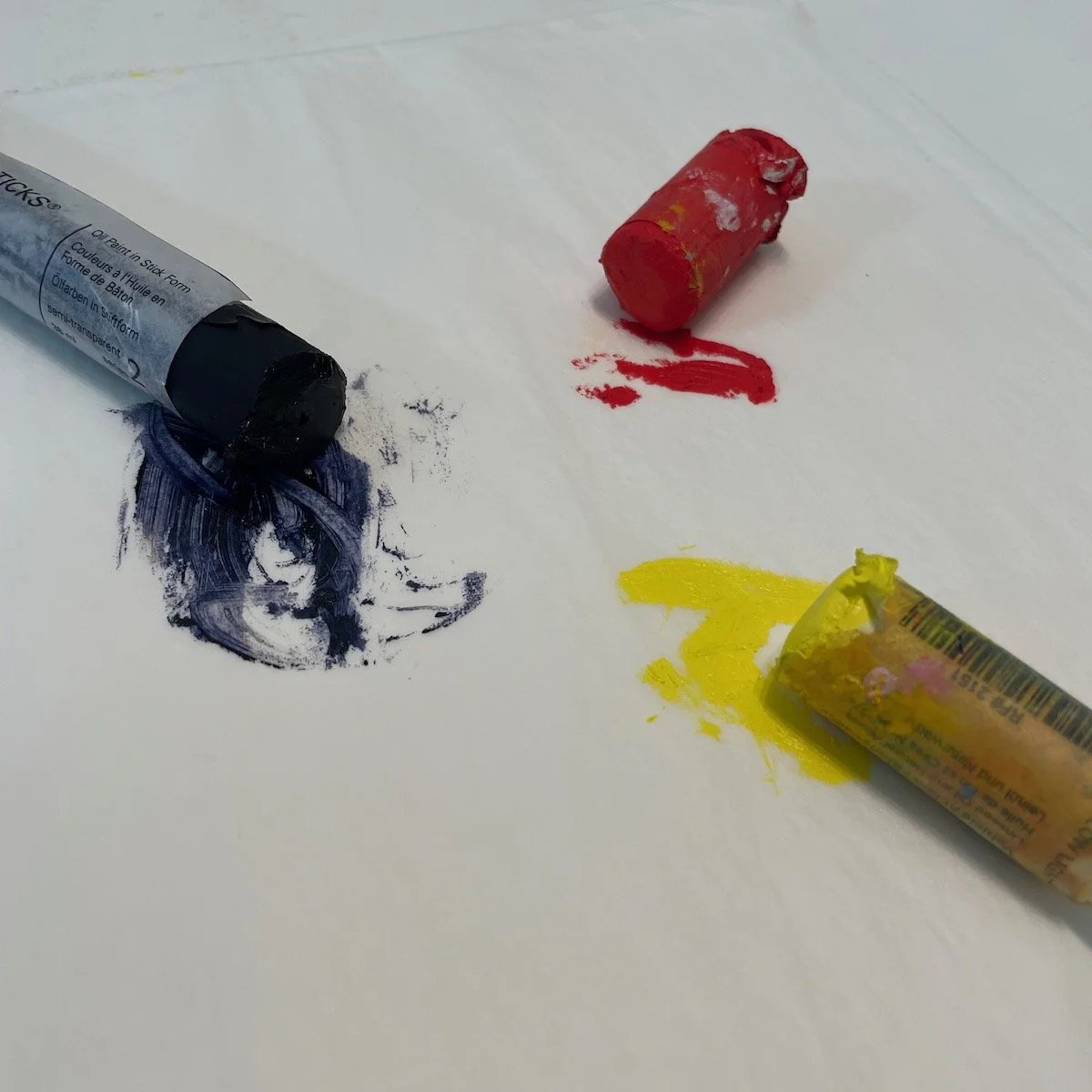
Let’s compare these two reds for example: Alizarin Permanent which leans more toward violet (think pickled beets) and Cadmium Red which leans more toward orange (think tomato) are both reds. Alizarin Permanent mixed with Ultramarine Blue will result in a true violet. This violet can then be tweaked to a red-violet by adding more of that red or to a blue-violet by adding more blue.
Cadmium Red, on the other hand, will make a true, vibrant orange when mixed with Cadmium Yellow because it leans toward orange. Try mixing this red with Ultramarine Blue, however, and you will get a dulled down, brownish version of violet.
Let me clarify that there are no “good or bad” colors or “right or wrong” colors, but understanding a few basics will help you create the color you want instead of colors you don’t. Mixing colors is best learned by doing, much like learning to drive. You need to get in there and actually do it.
The following exercises using R&F Pigment Sticks® and a palette knife will help you get more comfortable with color. Mix your colors on palette paper or the shiny side of Reynold’s freezer paper and transfer the resulting color to a sheet of Arches Oil Paper or watercolor paper that has been prepped with white gesso.
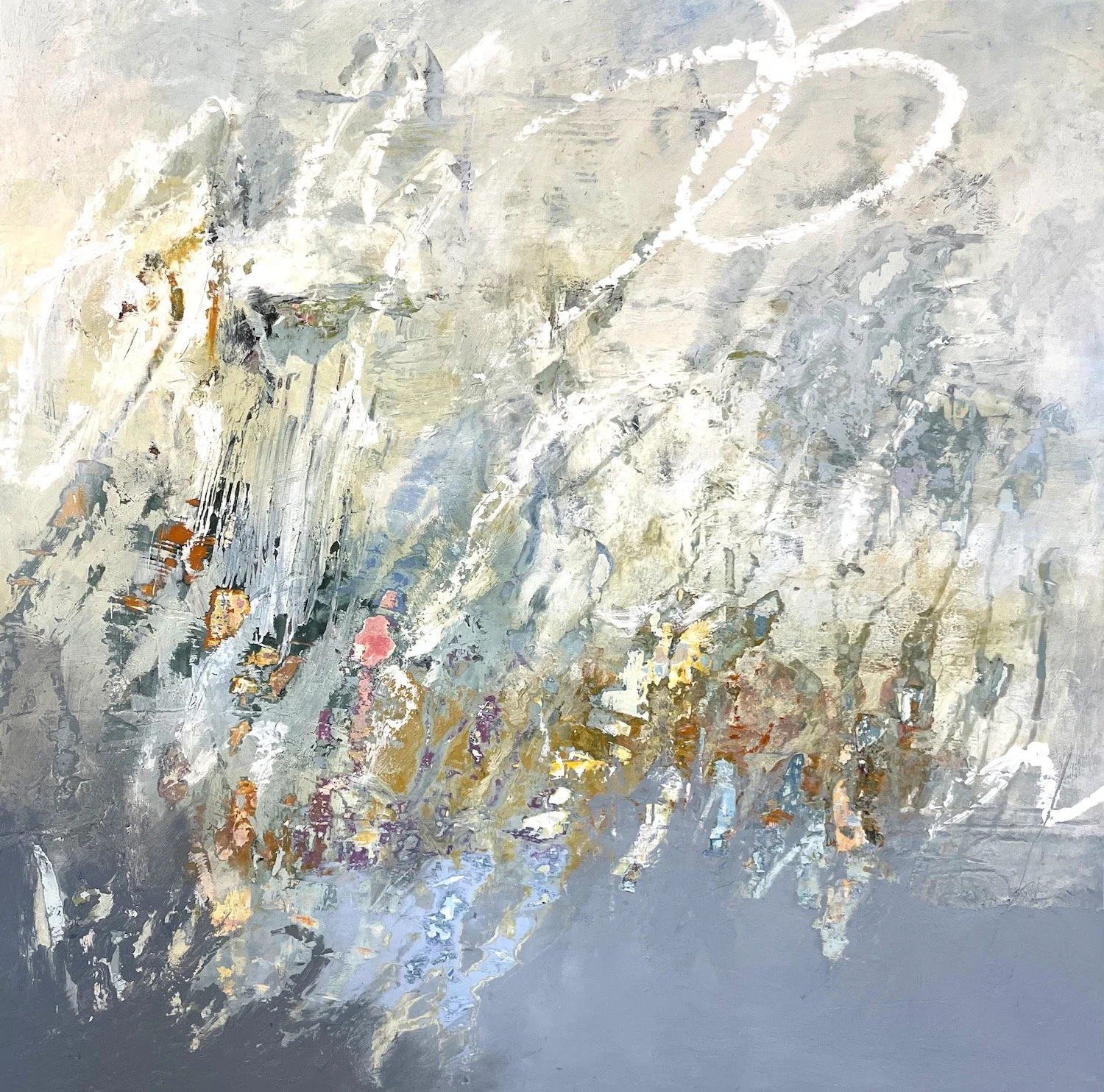
Artwork credit: Julie Snidle
Exercise #1: Make a chart like a bingo card with BLUE paint colors across the top and YELLOW paint colors down the left side. Choose a blue from the top, mix it with a yellow from the side, and place the new color in the intersecting square. Continue mixing blues and yellows to create a wide variety of greens.
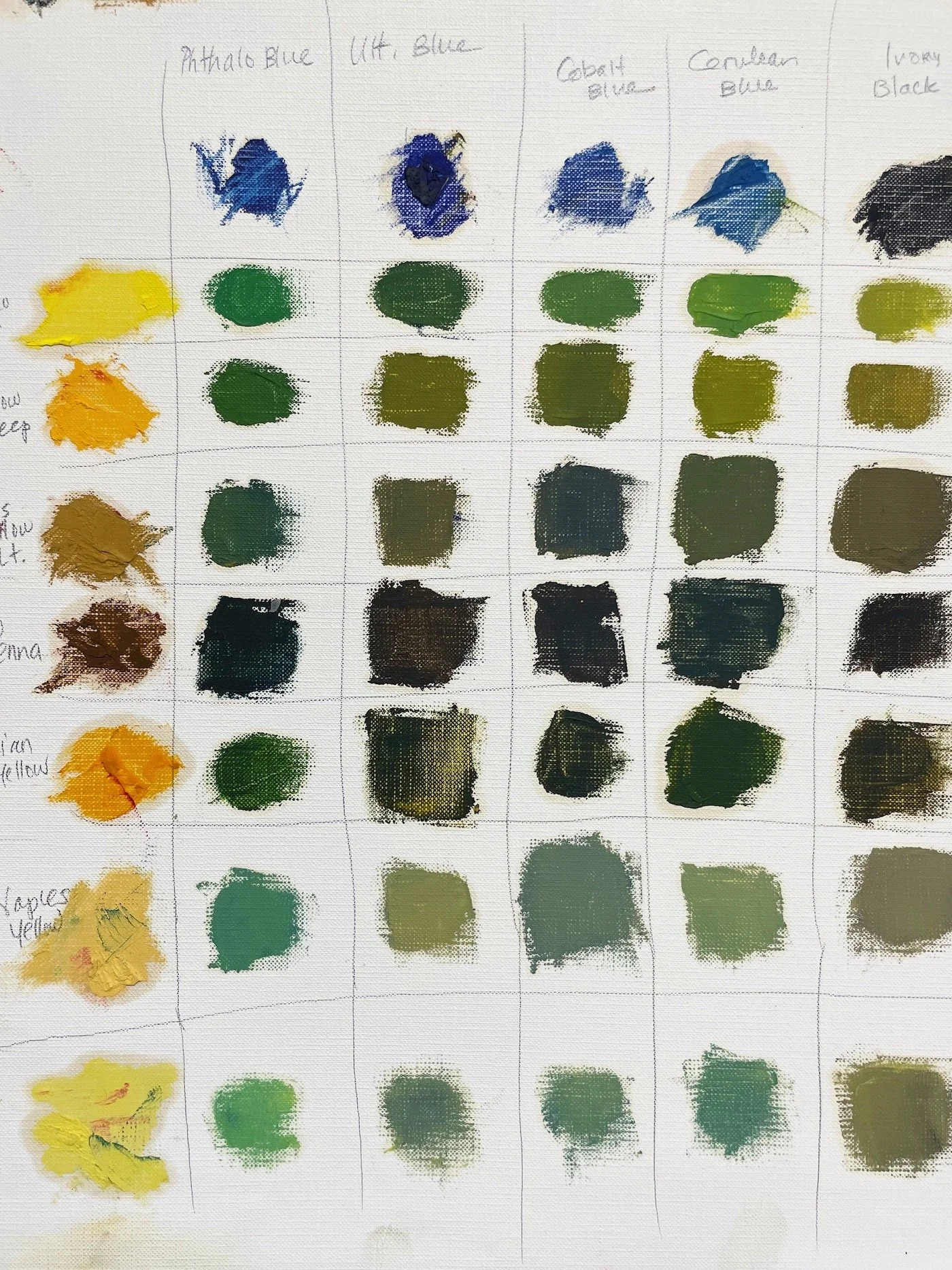
Each individual green can also be tweaked by how much blue or yellow is in each mixture. Adding white to any of the greens will create a tint, or lighter value of that green. Now you know which blues and yellows will create your favorite greens.
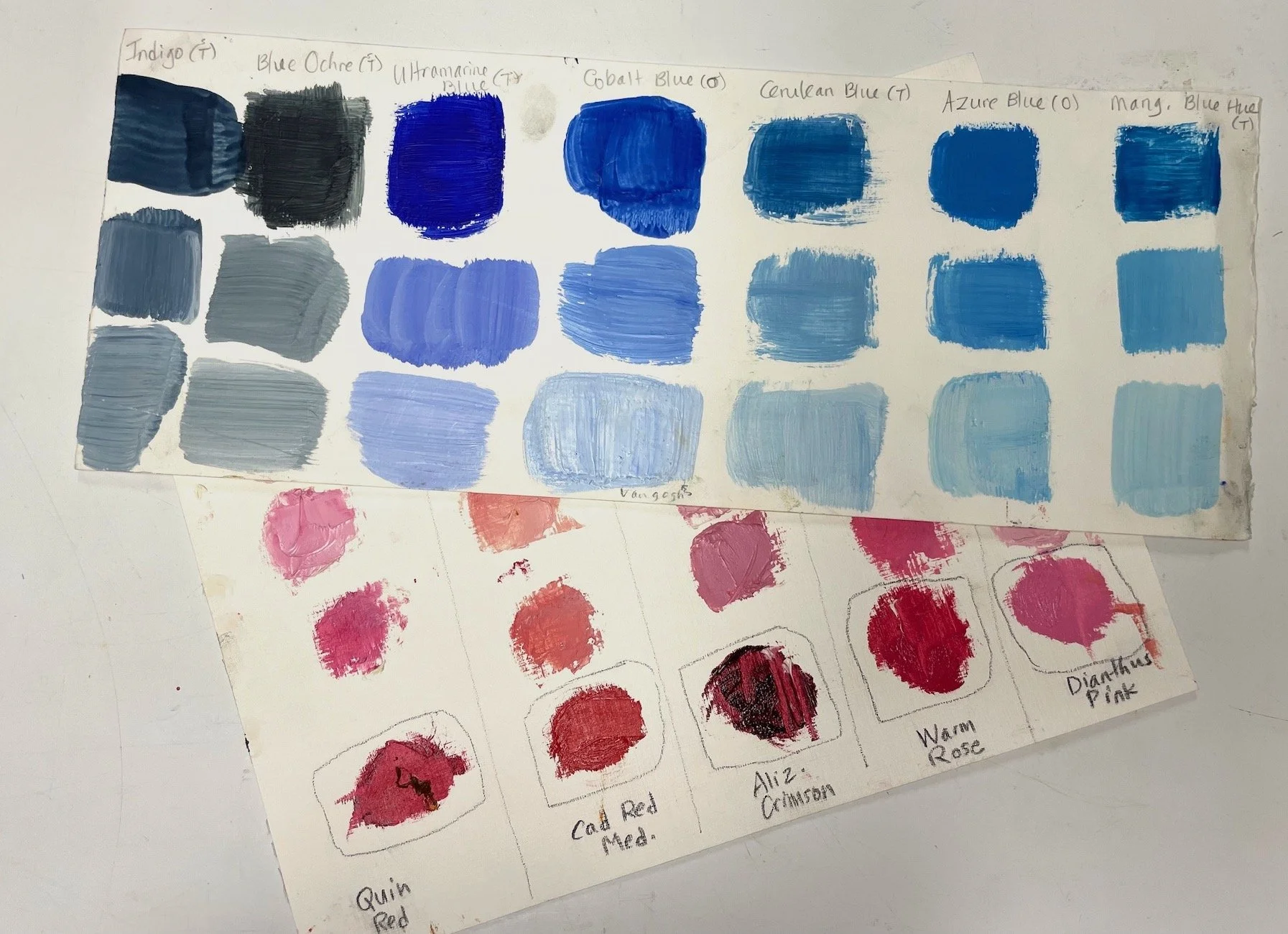
Exercise #2: Make another chart. This time put all of your reds at the top. Make a pink from each red by adding it to white. Experiment with the ratio of red to white to get a variety of values (lightness / darkness).
Next try this exercise using white with your blues. Every blue is unique and will give different results when added to white.
I keep these charts in my studio for future reference. White is a great way to discover the lighter side of R&F’s darker pigments, too. Try white with Courbet Green, Turkey Umber Greenish, or Viridian.
Note When mixing a darker color and a lighter color (or white), it is wise to add the darker color into the lighter color a little at a time. Remember a tiny bit of one color can drastically shift another color.
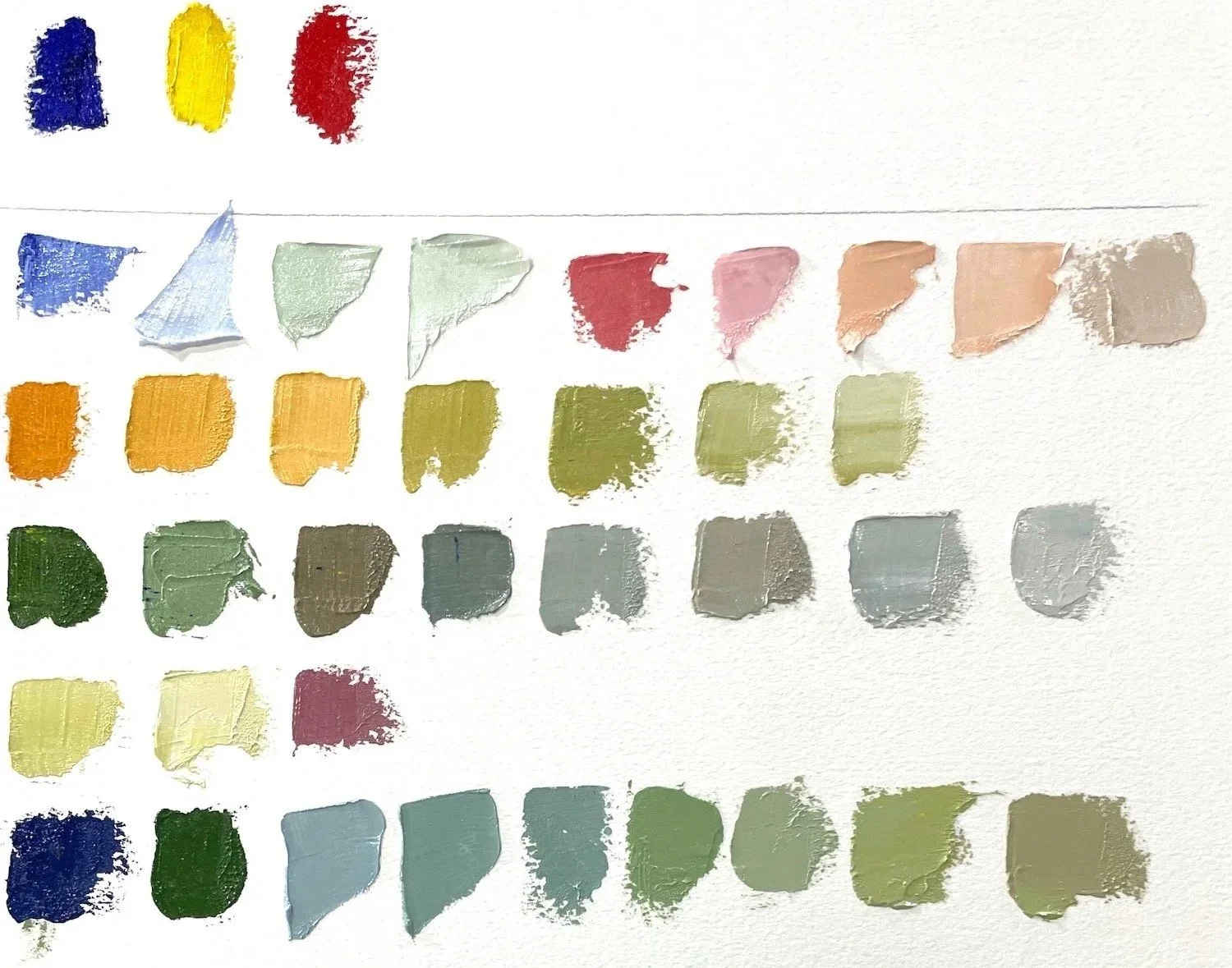
Exercise #3: The object of this exercise is to create dozens of harmonizing colors from only 3 parent colors plus white. Start by choosing any red, yellow, and blue. These will be the “parent” colors. Mix two of these parent colors together, creating as many new colors as you can, varying the proportions and adding white.
Continue mixing all three of the parent colors with each other and/or white to produce dozens of “offspring” colors. Challenge yourself - how many different colors you can make from just these 3 parent colors and white?
Notice how every color you made could potentially be used in the same painting since they’re already related. You’ll discover that even the tiniest dot of a blue when added to your orange (red + yellow) will shift it from intense orange to rust or even brown. This is how we can dull down or “neutralize” those intense saturated colors.
Mixing complementary colors (blue + orange; red + green; yellow + violet) together creates neutrals. Adding white to these “muddy” neutral colors will result in gorgeous light neutrals that you’ll fall in love with.
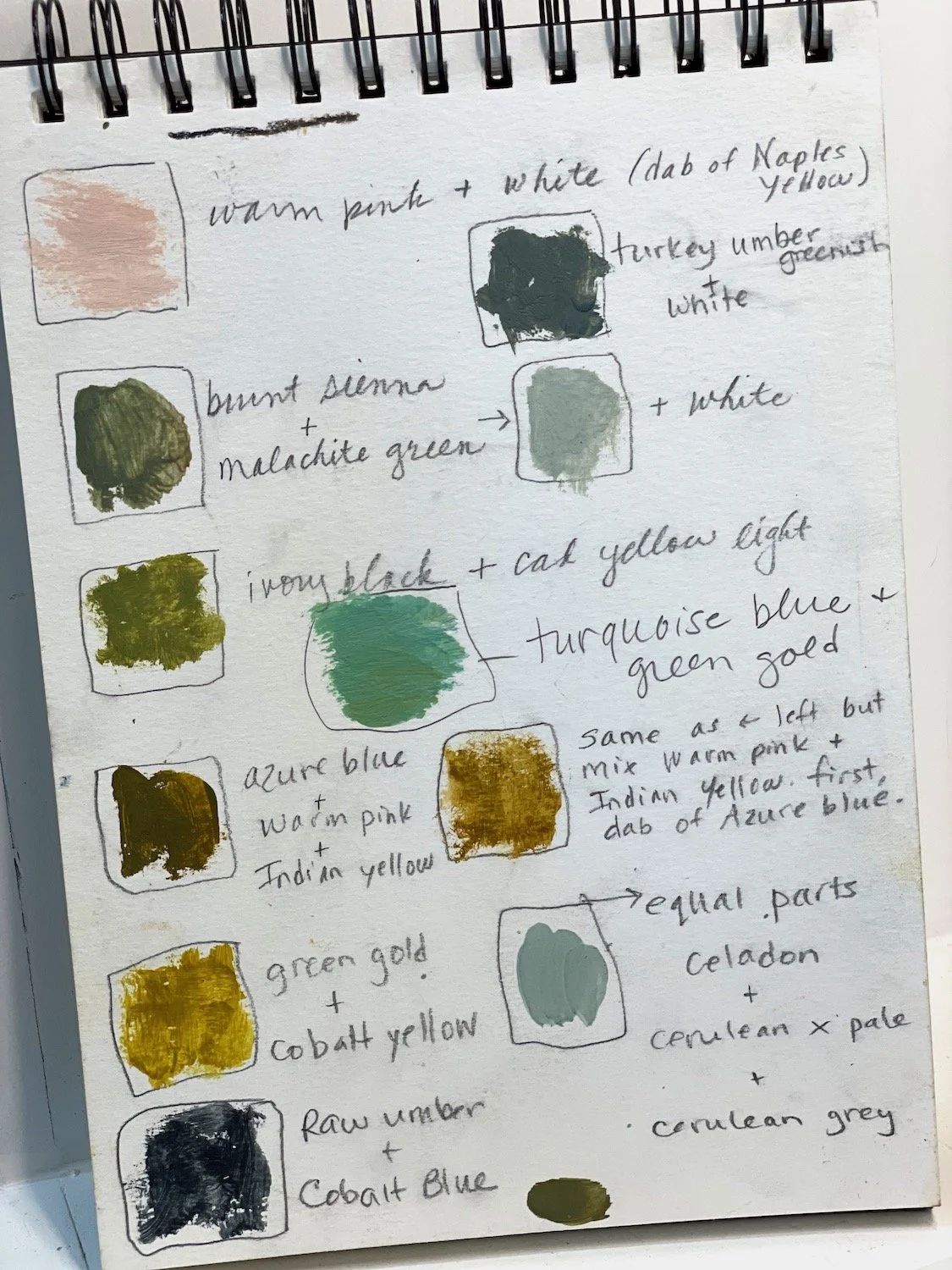
Tip: Create your own reference guide! When you do mix a color that you love, paint a swatch of it in a journal and jot down which colors were used to create it.
A word about opacity. The colorants or pigments in paint are known to be either opaque, transparent, or semi-transparent. On a molecular level, these paint pigments are either like rocks or gemstones. Rocks absorb light; gemstones reflect light. Both are beautiful but have different uses.
Opaque colors are great for coverage and hiding unwanted areas of your painting.
Transparent colors produce a sheer veil of color or glaze that helps to unify the painting while allowing you to see through to the parts of your painting you want to retain.
In general, when you mix two transparent colors together, your new color will also be transparent. Once an opaque color has been added to the mix, your new color will be opaque.
Mixing colors is fun, surprising, and oh so useful. Change out just one parent color, for example, and you’ll get a whole new batch offspring colors.
Julie will be joining us for a live virtual color mixing demo on Thursday, May 21 from 4 - 5:30pm ET. The event will be recorded and shared with everyone who registers. Learn more and sign up here.
If you would like to explore color further, Julie will be teaching Discover Painting with Oil and Cold Wax 8/31 - 9/3 at Paint Space Nola in New Orleans, LA.
Julie offers encaustic or oil and cold wax painting workshops in her studio in Fairhope, Alabama by appointment. Visit juliesnidle.com to learn more.