
Ask Richard: Mars Pigments

Portrait of R&F founder Richard Frumess in Pigment Sticks by Dorothy Wiegner in 1994.
Ask Richard is back! We chatted with R&F founder Richard Frumess about Mars pigments and, more specifically, the Mars paints in R&F’s color line: Mars Yellow (Light and Deep), Mars Orange, Mars Red, Mars Violet, and Mars Black.
These colors can often be overlooked in favor of their brighter, splashier neighbors, but the Mars family has a lot to offer the painter who prefers nuance.
What do we mean when we refer to “Mars pigments?”
Yellow, orange, red, brown, and black iron oxides occur naturally in the earth and have been used as pigments since before written records were kept. Mars pigments were developed at least as early as the 17th century by alchemists at the dawn of modern chemistry by transforming iron into iron oxide pigment through chemical processes. They were originally called “Saffron Martis” and “Crocus Martis,” translated variously as yellow or red of Mars because Mars was the Roman god of iron, as well as war.
The chemical process of oxidizing iron produces a yellow hue. Heating it at a high temperature produces a range of hues from orange to violet depending on the degree and duration of the heat.
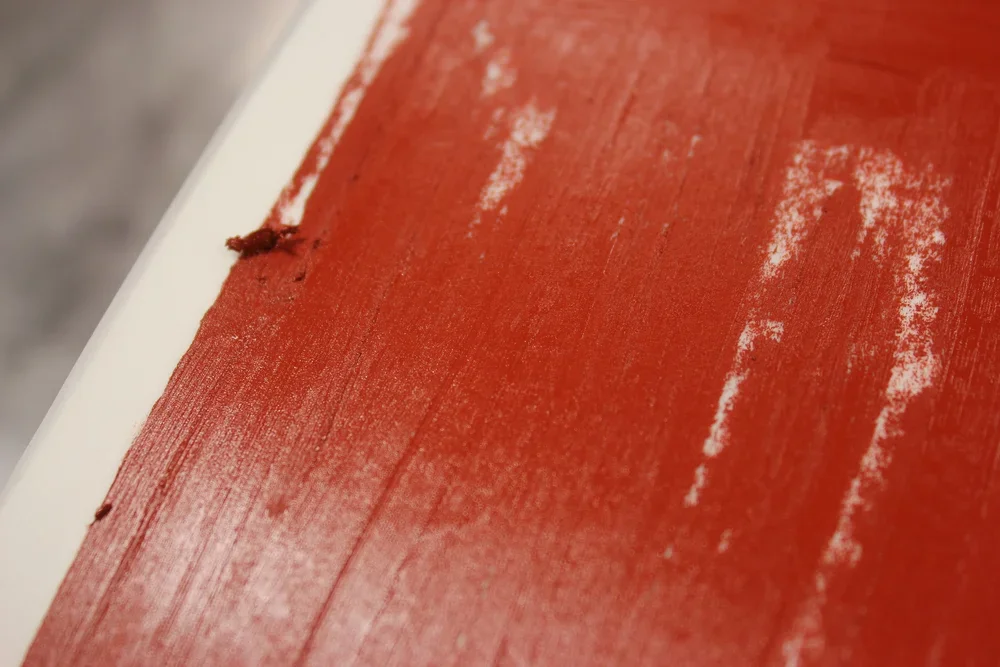
Mars Red Pigment Stick®
What were these pigments used for initially?
Red iron oxide was historically a highly valued industrial product because its stability in high heat made it useful for enameling and other techniques employing high temperatures. The iron oxides were used as paint pigments for industrial purposes early on in their development and may have been used for artist paint as early as the 18th century. But it was definitely part of the artist palette by the mid-19th century, along with the introduction of newly synthesized metal-based pigments from cobalt, chromium, cadmium, copper, zinc, and aluminum. It was at that time that “Mars” was accepted as the standard artist terminology for the range of iron oxide pigment hues.
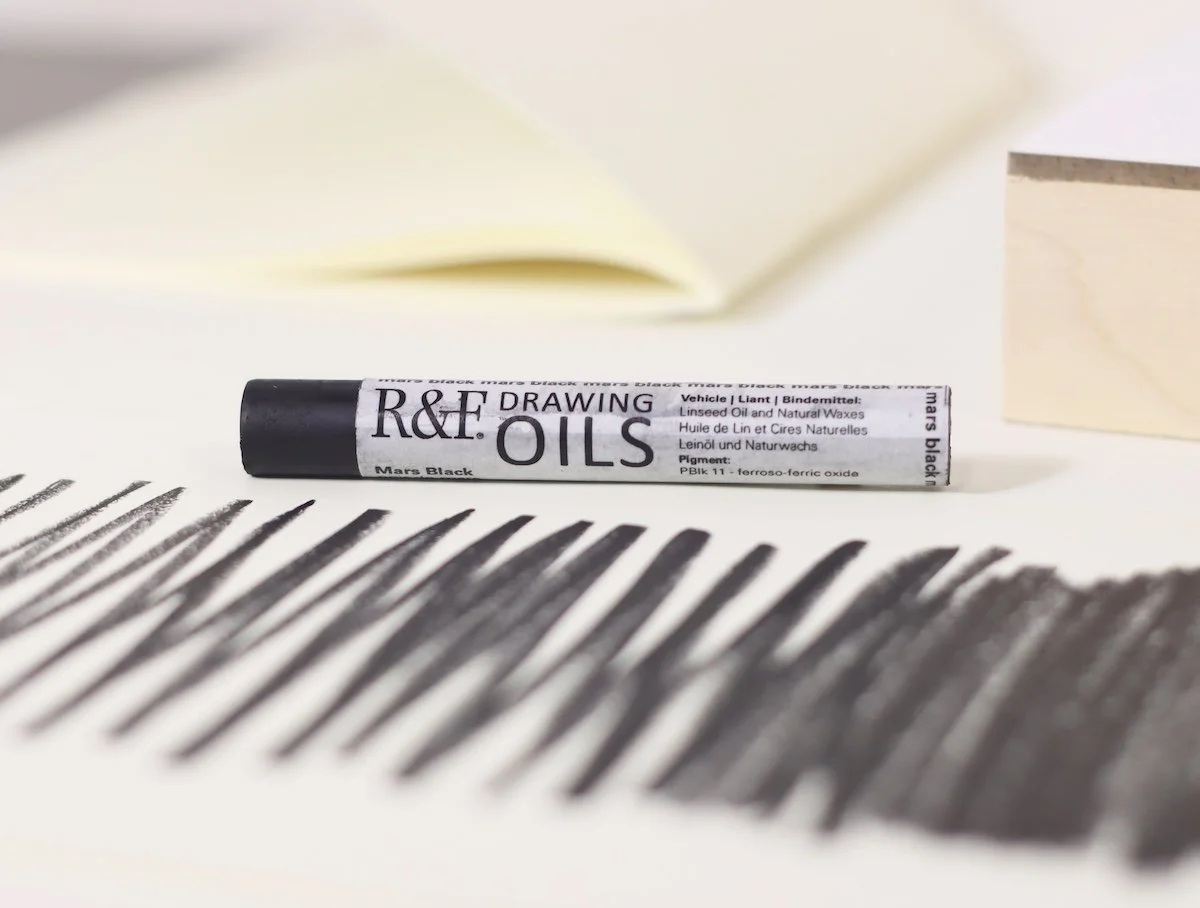
How does Mars Black differ?
Developed in the 20th century from magnetized iron, Mars Black is a newer arrival. It retains its magnetic characteristic as a pigment. (You can actually move it around with a magnet.) Mars Black has a higher covering power than carbon-based blacks, which are produced by burning organic materials such as ivory black (bone), lamp black (oil), or intense carbon black (gas). Its undertone hints at violet but is more neutral than the other blacks. The same when it is tinted with white.
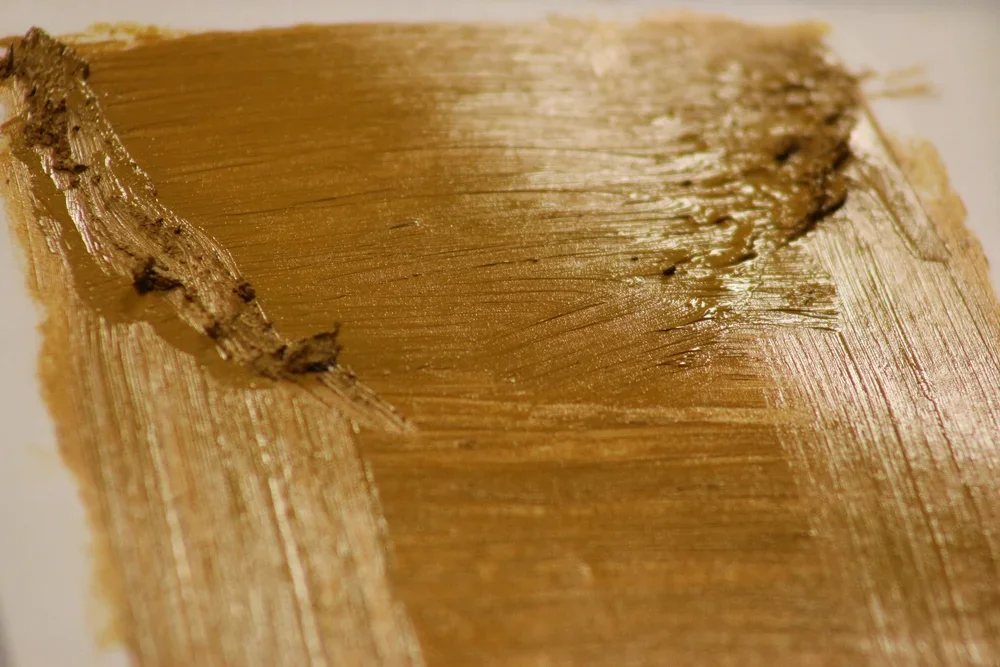
Mars Yellow Light Pigment Stick®
Mars yellows through violet are basically synthesized ochres. Natural ochres are agglomerations of iron oxide, clays, quartz, and other minerals, depending on their source. Mars colors, on the other hand, are pure iron oxide and therefore more uniform. This gives them greater covering power (opacity) and brightness than ochres.
Can you talk about little bit about translucency and saturation in regards to Mars pigments?
Solid and bold, Mars colors have little of the subtlety of more translucent colors. But that boldness, like the characteristics of any color, also depends on its relationship to other colors. Mars Red has a lower saturation than Cadmium Red, and next to it becomes brownish. Against Blue Ochre, however, it can appear copper-like.
Mars colors make a great counterpoint to earth colors (such as Siennas and Umbers), to translucent chromatic colors (such as Viridian, Quinacridone Red, and Ultramarine Blue), to neutral colors (mixed greys and browns, earthy greens), and to opaque chromatic colors (Cobalt Blue, Chromium Oxide Green, Cadmium Red or Yellow).
Below are some exercises that may give you a greater appreciation of the roles that Mars colors can play in color relationships:
Make a composition of flat shapes using only opaque chromatic colors. Then add in one or more Mars colors (not black).
Reverse the composition using only Mars colors (not black). Then add in one or more opaque chromatic colors.
Make compositions of flat shapes using Mars colors. Scumble or glaze over them with earth colors, opaque chromatic colors, translucent chromatic colors, or blacks.
Compare tinting Mars colors with white but also with other colors to tinting Cadmium Reds and Yellows. Keep in mind that a tint by definition is how a color is influenced by being mixed with another color. It’s not necessarily just by white.
Using each of the 4 blacks at a time (Mars, Ivory, Lamp, Intense Carbon) plus white and medium, create chiaroscuro compositions to compare the difference between Mars Black and the carbon blacks.