
Artist Spotlight: Transparency, Texture & Depth with Isabelle Gaborit
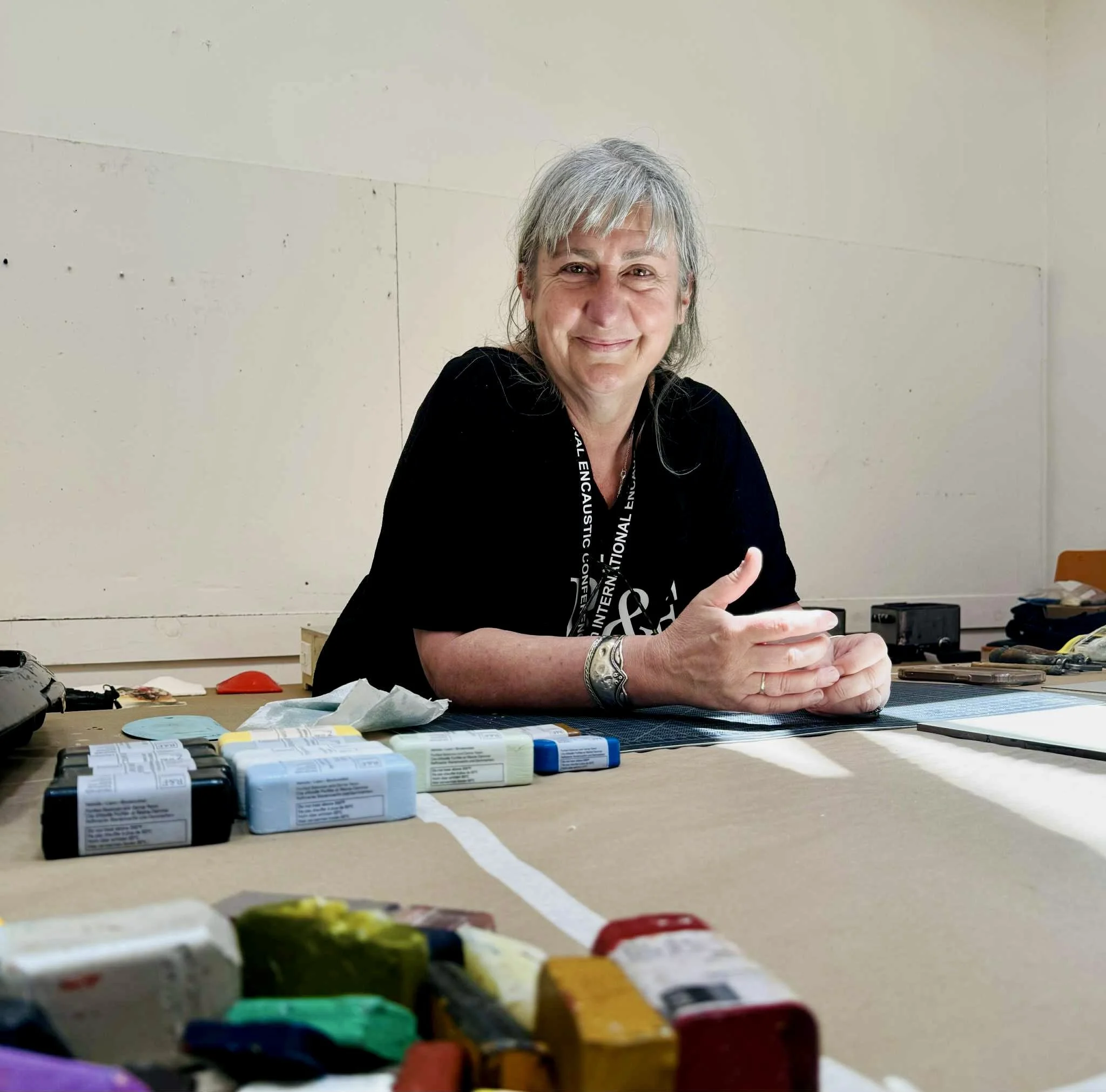
In this Artist Spotlight, R&F Core Artist Instructor Isabelle Gaborit shares her favorite colors and process for capturing the spirit and texture of a landscape. Isabelle’s work explores the intersection of ancient technique and lived landscape. Based in the Auvergne region of central France, her practice is informed by its distinctive volcanic terrain, deep valleys, caves, and river systems.
Isabelle studied sculpture, drawing, and painting at l’École des Beaux-Arts in Poitiers, France before completing a BA (Hons) in Fine Arts in Ireland in 2006. Her work has been exhibited nationally and internationally, including France, Northern Ireland, the USA, Germany, and China.
With over two decades of teaching experience, Isabelle has led workshops and retreats across Ireland and internationally, including the International Encaustic Conference in Massachusetts, Mulranny Arts in Ireland, and Kunstfreiraum in Switzerland. She is a Core Artist Instructor with R&F Handmade Paints, contributes to the online program Painting with Fire, and serves on the board of International Encaustic Artists (IEA).
One of the things I am constantly looking for in a painting is a sense of push and pull. I want some areas to come forward and others to recede. I want the eye to move through the painting rather than landing on everything at once. For me, transparency and texture are two of the most important ways of creating this tension.
But increasingly, I have realized that what I am really chasing is light.

My way of working has changed quite dramatically over the years. I used to begin with dark, opaque underpaintings and then build transparent layers over them. At that time, I was obsessed with texture and the physical surface of the painting. Now I find myself doing the opposite. I still love texture, but my obsession has shifted towards light, atmosphere and the way colour can float through the layers.
This is one of the reasons I love working with R&F encaustic paints. Their transparency gives me so many possibilities for building depth without closing down the surface.
I particularly love working with Alizarin Orange, for example. Its transparency allows the layers beneath to remain present, creating a warmth that feels as though it is coming from within the painting rather than simply sitting on its surface. Green Gold is another favourite. When it is extended with medium and used as a glaze, it can become almost luminous gold. Layer glaze upon glaze and something quite magical begins to happen — the colour gains depth while still allowing the layers underneath to breathe.
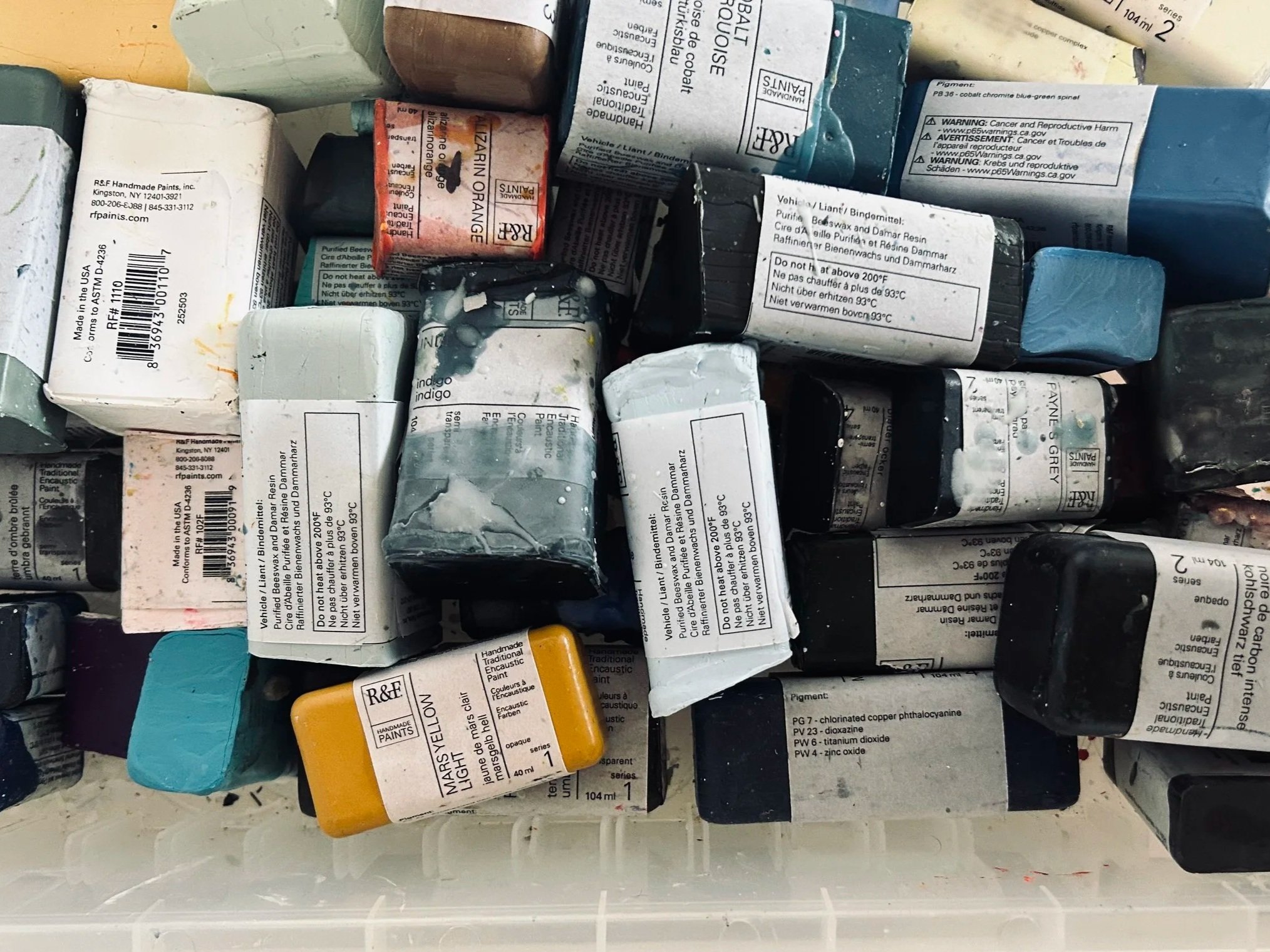
And then there is Stil de Grain, which remains one of my absolute favourites. I simply can’t get enough of it and I dedicated my last series of paintings ‘the Weight of Air’ to it, For darker transparencies, I often turn to Turkey Umber Greenish, which can remind me of the scorched, dark earth of volcanic terrain.
I love setting these transparent colours against something much more opaque. Put a transparent layer beside Brilliant Yellow Extra Pale, Celadon, or Cerulean Grey, and suddenly the question becomes: where does the landscape float, and where is it anchored in space?

That contrast is where the push and pull really begins.
I use these colours not only as final layers but throughout the painting — in underpaintings, in successive layers of glaze, and sometimes through pigment sticks. I might establish a colour early on, cover much of it, and then bring it back later through a transparent layer or by scraping into the surface. The painting becomes a conversation between what is visible now and what is still quietly present underneath.
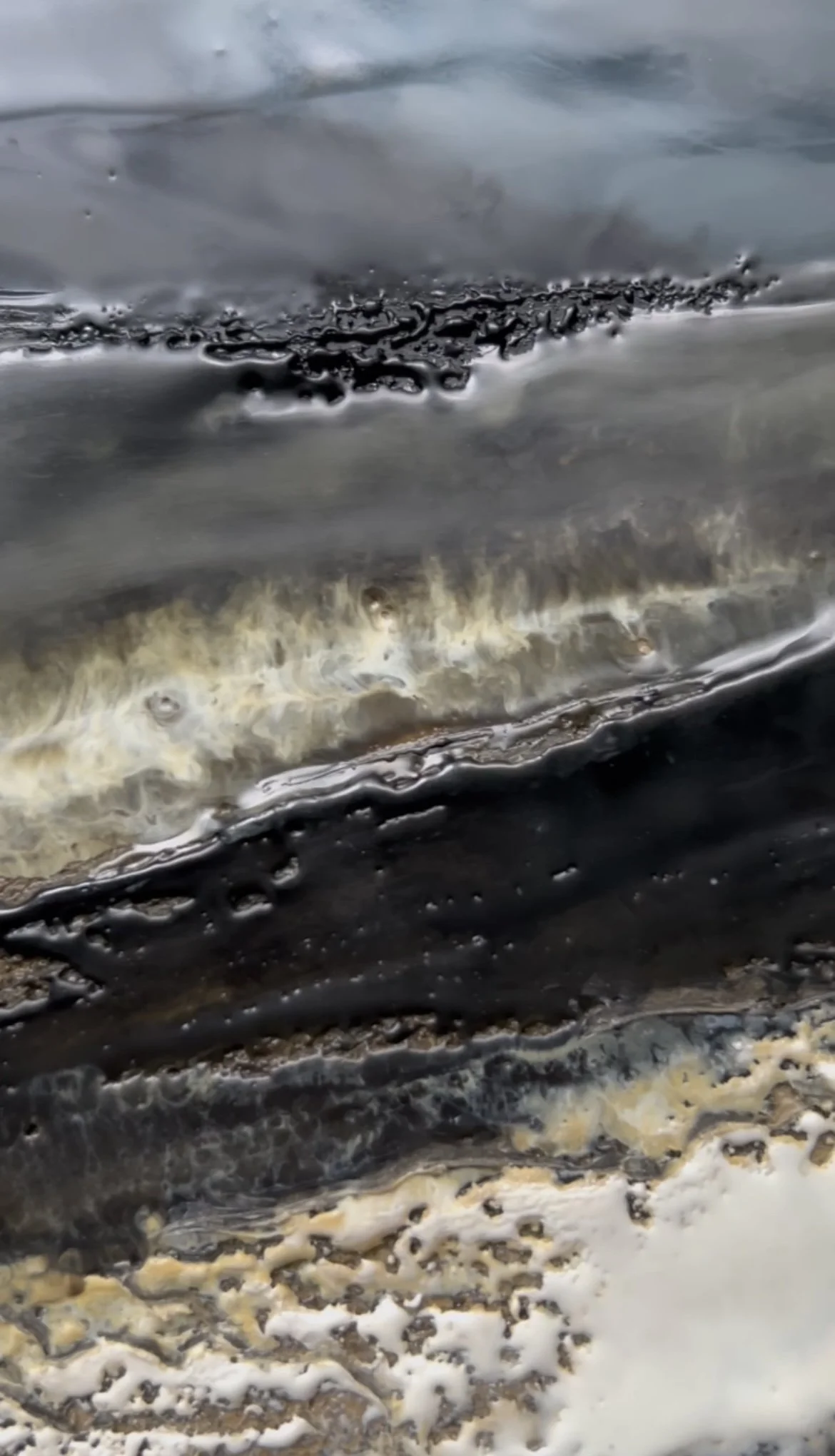
There are colours I return to again and again: Alizarin Orange, Green Gold, Stil de Grain, Turkey Umber Greenish, Brilliant Yellow Extra Pale, Celadon, Cerulean Grey, and also Cerulean Blue and Indigo. They have become part of my visual vocabulary. I use them to evoke atmosphere, temperature, sensation, or a particular quality of light.
This is important to me because my work isn’t really about landscape in the traditional sense. It is about how we respond to landscape and how we experience it.
Landscape is my starting point for abstraction. I might begin with observation, a sketch or a memory, but I am not trying to reproduce what I saw. I am trying to distill it — to reduce it to essential shapes, values, directional forces, and rhythms, and then gradually rebuild it through painting.
Sketching is an essential part of this process. Whether I am drawing outdoors or working from memory afterwards, the sketches are not intended to be finished representations of a place. They are my response to it. They are a way of paying attention — of recording what I noticed, what moved me visually, and how my body experienced being in that particular landscape.
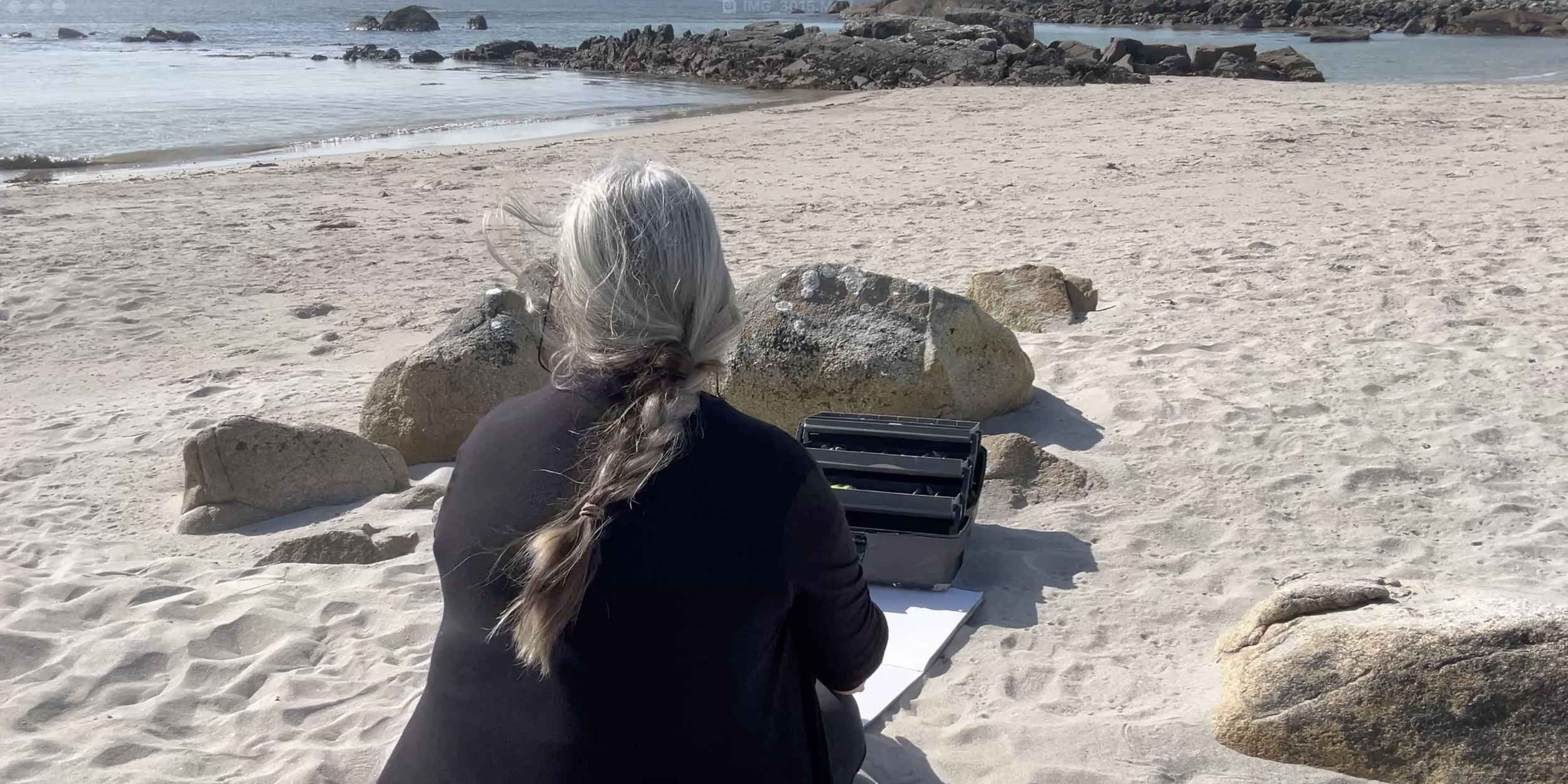
For me, this is a very sensorial and embodied experience. I might be looking at a volcanic ridge, a stretch of coastline or a mist-filled valley, but I am also responding to the movement of the light, the weight of the air, the direction of the land, the colour I remember rather than the colour that was actually there.
And this is where encaustic becomes such an extraordinary medium. I can build layer upon layer of transparent colour, allowing light to travel through the painting. I can then interrupt that transparency with an opaque mark, scrape it back, carve into it, or introduce texture. A thick passage can come forward while a thin glaze recedes. A mark can disappear beneath several layers and then unexpectedly reappear. The surface itself begins to behave like a landscape, with foreground, middle ground, and distance created not only through imagery, but through the physicality of the paint.
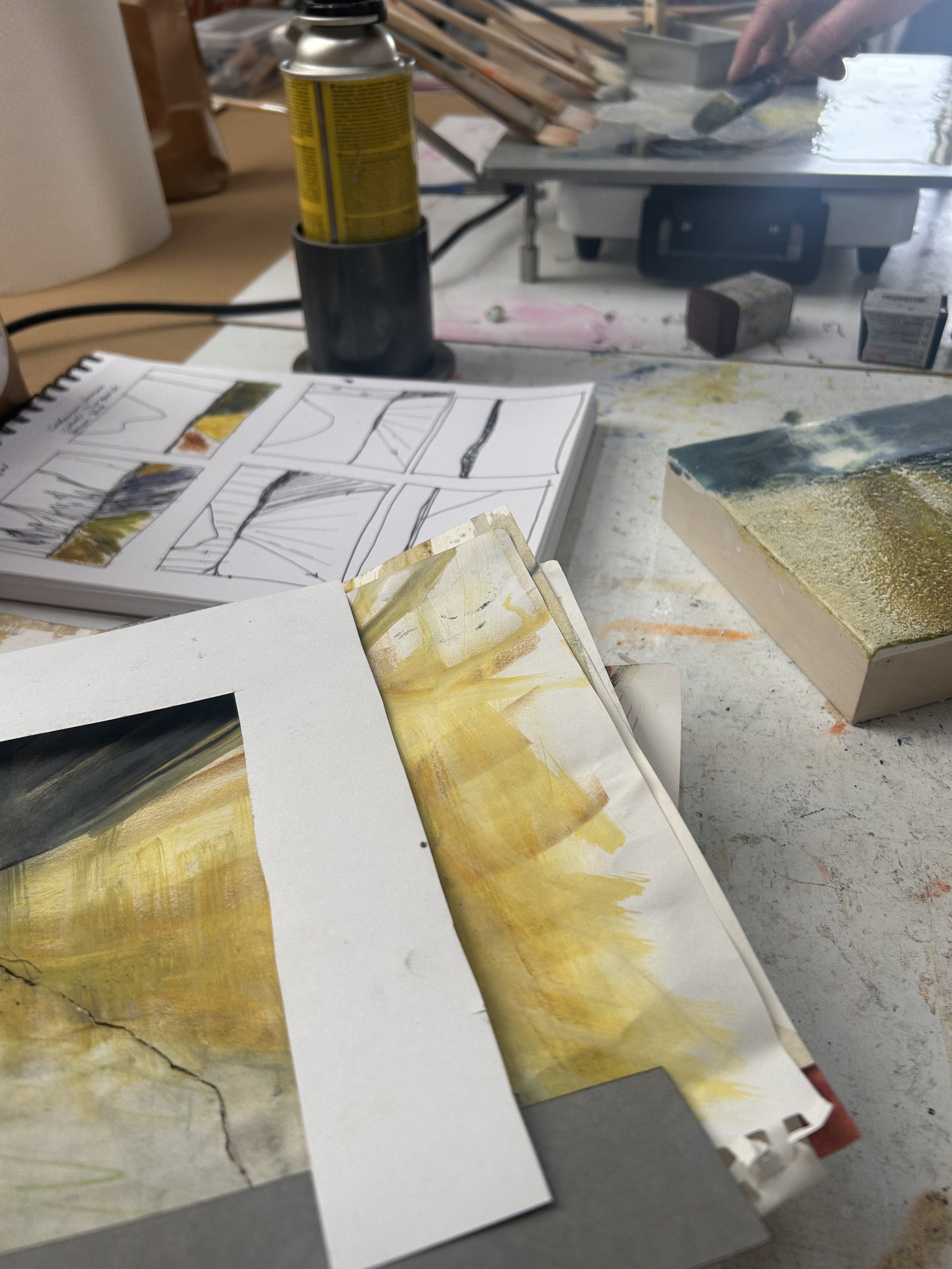
When I am working, I try not to become too attached to any one layer. A passage that looks beautiful on its own may need to be partially covered, scraped away or interrupted. Sometimes the most interesting part of a painting is what is left behind after something has been taken away.

I think this is also where the sense of moodiness in my work comes from, although I would probably call it atmosphere. I am interested in distilling a landscape down to energy and light rather than describing it literally.
When a painting feels too flat, too evenly weighted, or too busy, I step back and ask: Where could I create a little more openness? Where could I introduce a heavier mark? What happens if I let the layer underneath remain visible? What happens if I cover it? And perhaps most importantly: what am I trying to capture and why?
The conversation between transparency and opacity, between what is revealed and what is hidden, between texture and light, is what creates that feeling of movement and depth — that wonderful push and pull that keeps me engaged with the painting.
Isabelle offers encaustic workshops and retreats in Ireland, France, Switzerland, and the United States. Visit Isabelle Gaborit to learn more.